Total Pageviews

Showing posts with label vocabulary. Show all posts

Sunday, August 7, 2022

Some collocations with the word 'heatwave'

 Hiya!

How's your summer going? How are you coping with this sultry weather and sweltering heat? It seems that the world is seeing an uncommon heatwave that is lasting longer than usual, for example, the temperatures in London have soared to 40ºC, which makes it one of the hottest summers ever!

I'm pretty sure you all have noticed that this summer is hotter than usual... This situation has encouraged me to write this post in which I'll be dealing with some words that collocate with 'heatwave'.

I'll start with a definition of 'heatwave'. Merriam Webster defines it as "a period of unusually hot weather".  This current heatwave is flooding the media and journals, radios and TVs are all reporting this unexpected surge in temperatures. After reading some of  this news, here you have some of the most common collocations with the word 'heatwave', I have gathered:

From: https://www.facebook.com/EyeOnTheSky/videos/the-heat-wave-is-over-heres-a-summary-from-several-cities-and-towns-around-the-r/1891167690940293/
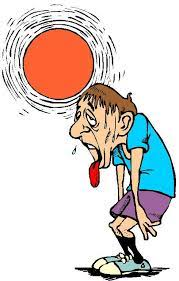
ADJECTIVE + HEATWAVE

There are some adjectives that describe the big temperatures linked to the heatwave:

- Stifling heatwave: 'Stifling' is something that kills by deprivation of oxygen. "Stifling heatwave grips central United States" (Reuters, 15 June 2022)

- Scorching heatwave: 'Scorching' can be defined as something that causes intense heat. "Brits brace for another scorching heatwave next week"  (Express,  6 August 2022)

- Suffocating heatwave: If something is suffocating, it means you die by being unable to breathe. "Is Spain's suffocating heatwave finally ending?" (The Local, 27 July 2022)

- Torrid heatwave: If something is torrid, it gives off intense heat, especially from the sun. "Torrid heatwave sends mercury soaring" (Times Now, 26 April 2022)

- Searing heatwave: The adjective 'searing' refers to something very hot. "Searing heatwave to spark huge lightning blasts across Britain." (Express, 28 July 2022)

- Gruelling / grueling heatwave: If something is 'gruelling', it is exhausting. "Gruelling heatwave sears Pacific north-west." (The Guardian, 27 July)

There are some adjectives that describe the intensity of the heatwave:

Ferocious / fierce / intense/ deadly / severe / extreme / powerful / brutal are all adjectives that collocate with the word 'heatwave'. 

Other adjectives depict the duration of a heatwave: 

Long / prolonged/ extended / unprecedented heatwave


HEATWAVE + VERB

A heatwave can 'hit' or 'strike' a country / 'sweep' or 'spread' across a country / 'grip' or 'hammer' a country. A heatwave can also 'bake' or 'cook' a country.

"UK set for record temperatures as heat wave hits Europe" (The Washington Post, 18 July 2022)

"Record temperatures in Shanghai as heatwave strikes China" (Uca News, 14 July 2022)

"Extreme heat wave sweeps across many European countries" (USA Today, 18 July 2022)

"Europe swelters as heatwave spreads" (BBC News, 13 July 2022)

"Heatwave grips Europe, temperatures set to soar past 40ºC" (Outlook, 7 August 2022)

"Heatwaves hammer megacities in China's Yangtze River basin" (Reuters, 14 July 2022)

"Unprecedented heatwave cooks western Europe" (Euronews, 20 June 2022)

"Record-breaking heatwave bakes Americans" (Inquirer News, 21 July)


VERB + HEATWAVE

Combat / endure / face / prevent / survive / survive / cope with  a heatwave


Now that there are said to be more and more heatwaves every year, I hope you can use these collocations to talk about heatwaves more accurately! 

You can also see other entries related to this: summer vocabulary; holidays vocabulary; holidays collocations; hot weather; frolicking in the water.

Friday, February 25, 2022

It's Carnival! It's about time to dress up and...revise your English vocabulary!

 Hiya!

You're walking down the street in your neighbourhood and you see a lot of children going to or coming back from school in their costumes... You're not getting crazy, it's just Carnival! Carnival is a tradition celebrated in Spain and in many other parts in the world (such as Rio de Janeiro, Venice...).

It's not an outstanding tradition in the English-speaking world (if you travel to the UK or the US they probably won't know much about this tradition). However, Carnival is a great opportunity to improve your English vocab, so why not dedicate an entry to this wonderful tradition?

ACTIONS YOU DO AT CARNIVAL

  • DRESS UP / WEAR A COSTUME / DISGUISE YOURSELF AS A (MONKEY)
  • MAKE YOUR OWN COSTUME
  • WEAR MAKE-UP / USE MAKE-UP / MAKE UP (verb)
  • ENJOY THE CARNIVAL PARADE 
  • ENJOY THE FIREWORK DISPLAY
  • BE IN A FESTIVE MOOD
  • TAKE PART IN BULLRUNS (IN CIUDAD RODRIGO)
  • PAINT YOUR FACE 
  • DANCE TO THE FESTIVE MUSIC
  • GO PARTYING
CARNIVAL ACCESSORIES, OUTFITS AND OBJECTS

                 FANGS                                         MASKS
 
                  CONFETTI                                 FEATHERS
             WIG                                            TINSEL
            VEST AND HAT                               CAPE


BOW, SWORD, ARROWS                     BALLOONS
    FAKE GLASSES, NOSE                   GUN
        AND MOUSTACHE

CARNIVAL COSTUMES
These are examples of some Carnival costumes:
  • Sponge Bob Square Pants
  • Pirate
  • Cowboy / cowgirl
  • Clown
  • Vampire
  • Soldier
  • Doctor
  • Superhero
  • Archer
  • Magician
  • Police officer
  • Fairy
  • Vampire
  • Witch
  • Werewolf
  • Indian
  • Ghost
  • Princess
  • Skeleton
  • Knight
  • Viking
Here you have some ideas for some Carnival costumes, if you are into handcrafts, he he. 

Here you have the link and presentation to an old entry on fairy tale characters


And to conclude, here you have an English video which reuses some of the Carnival vocabulary we've seen in this entry:


I'll soon be sharing with you some exercises related to Carnival. In the meantime, enjoy Carnival if you can and dress up!

Thursday, April 9, 2020

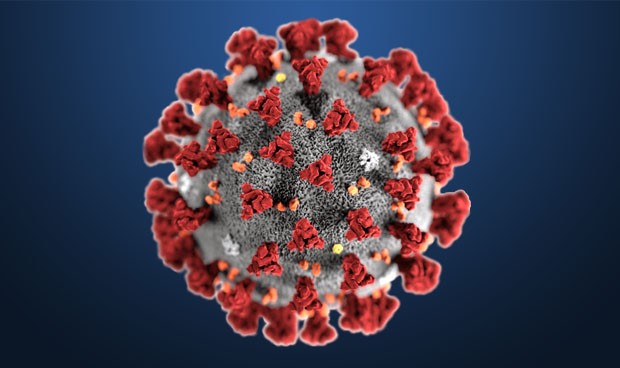
Learning English during the Covid-19 outbreak

Covid-19, gripe y otros coronavirus: ojo a las comorbilidades
Image taken from: https://www.redaccionmedica.com/secciones/neumologia/el-covid-19-frente-a-la-gripe-y-otros-coronavirus-ojo-a-las-comorbilidades-8526
Hello there!
I hope all of you  are fine and I hope this virus hasn't caused you so much trouble....I'm just coping with this situation. It's been literally ages since I wrote a blog entry. Being a parent is hard work and basically you don't have any spare time... What has it taken for me to resume my writing? Well, a world's pandemic disease. After being in confinement for a month, I have taken matters into my own hands and I have decided to resume my writing, as I had tucked my blog away...  Anyway, to deal with this unbearable situation, I have decided to resume my writing devoting this entry to Covid-19. How original! Right?
My firm resolution with this entry is that you all can express what you are going through in English, i.e. that you can learn some vocabulary, pharases and expressions related to the situation we are going through. Ready?

- Covid 19 is a pandemic disease that has affected the world on a global scale. 

- Covid 19 is not a new virus, but, rather, a new strain of the Covid family.

- The outbreak of this virus started in Spain on January, 31st. 

- At first, no one was worried because it was deemed to be just like a normal flu. However, its mortality rate so far has surpassed all the foreseeable expectations. The virus manifests through flu-like symptoms like dry cough, high temperature or fever, dyspnea and other breathing difficulties. 

- Although the virus mortality rate is not high, it is particularly aggresive and even deadly among the elderly and people with previous health conditions. 

- It's highly contagious! We all need to act in order to prevent it from further spreading. To prevent its spread, some containment measures are necessary: you must wash your hands regularly with soap and water; when coughing or sneezing, use disposable tissues and cover your mouth with your arm or elbow; stay in as much as possible and only go out when it is absolutely necessary, and avoid unnecessary travels. 

- On March, 9th, all on-site classes were suspended and by March, 11th, telework was highly recommended and prioritized. 

- Right now we are under strict confinement given that the state of emergency has been declared. That means, you can't be out and about unless you have a compelling reason: to commute to work, to buy supplies or groceries, to take the dog out for a (short) walk... In some other countries like Italy, some villages were under quarantine; that means no one could get in or out. However, curfew (a certain time, at which people must strictly be at home) hasn't yet been declared.

- This virus has caused countless downsides to people's lives and to the global economy, among others the loss and destruction of jobs and our health system is on the brink of collapsing, with our doctors, nurses and other staff overworking without proper personal protective equipment, risking their lives, because of the shortage of certain goods like gloves or facial masks. However, it has also triggered off people's solidarity. This virus seems to be bringing out the best in people: a lot of citizens are helping by sewing favcial masks, others are helping their elderly neighbours by going shopping for them; some people are putting culture at the citizens' disposal for free...

- On the plus side, thanks to this virus, we are realizing how lucky we were before when we could hug each other, see our relatives or even hang out with friends... In order for our lives to go back to normal, we must do our bit by following the containment measures dictated by the government or helping people in need... 

I hope you have learned a lot of vocab and expressions to explain this awful situation. Remember that confinement gives you the perfect opportunity to learn English! If you want to do so, have a look at my current teaching blog, my old teaching blog, my webpage to practise your listening and my webpage to practise your English grammar. 
See you soon. In the meantime, please, stay safe, ALIVE AND KICKING! 

P.S PLEASE, POST A COMMENT TO SAY HI OR IF YOU KNOW MORE EXPRESSIONS INVOLVING THIS SITUATION!

Monday, November 18, 2019

Love languages? Then this post is for you. Language-learning expressions!

Long time not write!
I know it's a cliché, but being a parent is hard work! Don't get me wrong, my son is a bunch of joy and, most importantly, he lets me sleep at night, but, in spite of that, I find it difficult to find the right time for writing. Anyway, I'm struggling to keep my blog alive and kicking and that is why today I'm writing an entry about language learning expressions that I thought you might consider useful because, if you're following my blog, you are likely to enjoy languages as much as I do!! Here we go!:

Expressions related to language learning

- To have a good ear for languages.

- I have to brush up my German. Otherwise, it’ll get rusty.

- To attain a level of competence (achieve/reach/get)

- To hold a conversation in English.

- To put everything you learn into practice.

- To get accustomed/used to speaking English in class.

- It’s very important to get your message across when speaking a language.

- I get by in German (I know some words and I can “survive”).

- I easily pick up languages, expressions or phrases. 

- I grasp new ideas, concepts, grammar (=understand).

- When you don’t know the meaning of a word, try to infer/guess it. If you are not able to, look it up in a dictionary.

- Acquiring a second language is difficult.

- English is becoming the world’s lingua franca. The dominance of English is undeniable; English is truly a global language (globish). English is gaining ground over some other languages. English is taking over (=taking control).

- A lot of languages are dying out because of English. English is threatening/endangering other languages. The survival of other languages might be compromised / might be at stake.

- Some verbs in –ing are taking hold. Modal verbs are giving way to other expressions (other expressions are taking over modal verbs)

- The English language seems to be evolving very quickly (noun: evolution; verb: evolve).

- You have to keep at your English studies.

- It’s difficult to come/get to grips with English pronunciation (=face/make an effort).

- To be immersed in an English-speaking country.

- To struggle with phrasal verbs (to have problems with).

- To be a proficient user of a language (=native-like user).

- To speak a second language (a language different from your mother tongue)

- A polyglot is a person that speaks a lot of languages, a person that picks up language very easily.

- You should take part in a language exchange.

- Some language changes go unnoticed or are barely perceptible. These are subtle changes.  However, other ongoing changes (=happening now) are considered as lasting changes.

- The more English you speak, the better.  The more languages you speak, the better person you’ll become!

Well, I hope you have found my entry useful. Why don't you start to use some of these expressions when using English? If you're interested in this topic revisit my entry on the importance of learning English and the importance of learning foreign languages.
See you around

Thursday, April 18, 2019

Parenthood: some English words and expressions that you will use if you've become a parent

Dear all,
by now most of you must know the breaking news: I have recently become a parent. In fact, I made my debut as a father on Father's Day (last 19th March). Can you believe it? What are the odds? My wife delivered my best gift ever!Well, today I'm going to share with you some words or expressions related to parenthood that you may use at some point, especially in the event of becoming a parent. 

1) Like father, like son: This expression is used to indicate that a given son behaves just like his father does, for example, both of them sleep long hours. There's another variant: like mother, like daughter. In Spanish, this idiom is represented with a stick and a splinter of wood. 
Image result for like father, like son
From: https://www.123rf.com/photo_36629360_stock-vector-like-father-like-son.html

2) The apple never falls far from the tree: Similar expression to the previous one. It indicates that  certain traits and characteristics are passed on to the offspring, that is, that your child will inherit some traits from you. For example, both of them are reckless. You know, the apple never falls far from the tree. 
Image result for the apple never falls far from the tree
From: https://www.amazon.co.uk/Proverb-Saying-Quote-APPLE-Magnet/dp/B003W2DPP0
3) To be the apple of my eye / to be the blue-eyed boy: If someone is the apple of your eye, it means that it's your favourite person in the whole world. By and large, baby girls are the apple of the father's eye. In fact, this is exactly what the idiom says in Spanish.
Image result for the apple of my eye
From: https://www.pinterest.com/pin/520939881891304508/

4) To be born with a silver spoon in one's mouth: This is said of a baby born in a wealthy family or in a well-off background. In Spanish we are a bit more modest and we refer to this expression as "be born with a bread under one's arm". That indicates the rate of poverty Spain is going through he he he. 
Image result for to be born with a silver spoon in one's mouth
From: https://www.pinterest.com/pin/413346072035905606/


5) Smooth as a baby's bottom: This simile doesn't need an explanation, does it? We all know how cute and soft babies' bottoms are, he he he. 
Image result for smooth as a baby's bottom
From: https://www.joelsartore.com/peo024-00019/

6. Like two peas in a pod: When two people are like two peas in a pod, they are very similar. Normally parents and children are like two peas in a pod. In Spanish, we refer to this as being like two droplets of water. This means that two people resemble each other, or simple that the child takes after their parents. 
Image result for like two peas in a pod
From: https://notonlygrammar.com/2016/05/17/two-peas-in-a-pod/
7. It takes a village to raise a child: A self-explanatory sentence to indicate that raising a child is hard work and requires the involvement of a great deal of people and caretakers. 

Image result for it takes a village to raise a child
From: https://www.amazon.com/Takes-Whole-Village-African-Proverb/dp/B0794P8NKV

8. Mamma's boy: If someone is mamma's boy, that means he is a bit clingy and overly attached to his mother and, therefore, less independent than other children at his age. 
9. Helicopter parenting: Helicopter parenting is a modern trend nowadays. If your parents are controlling and they are always watching you, that means they are helicopter parents. 

10. The shoemaker's son always goes barefoot: This idiom refers to the fact that when a family of a skilled person never benefits from the family's work. In Spanish, this saying is expressed by saying:" in the locksmith's house, iron knife". 

Image result for the shoemaker's son always goes barefoot
From: https://www.pinterest.com/pin/555561304016166504/

Which of these expressions have you used? Which one is your favourite? Post it in a comment!.
P.S. If you are interested in this issue, revisit my entry on baby's vocab.