Total Pageviews

Showing posts with label English quirks. Show all posts

Thursday, August 25, 2022

Capytonims III: other capitonyms

Hello there!

Some time ago this year, I wrote two entries about capitonyms, words whose meaning changes depending on the capitalization of their first letter. I wrote an entry related to capitonyms involving geographical places; another entry about capitonyms involving proper nouns or surnames and I vowed to write another entry on other capitonyms. I promised to write it soon and I said this in February... Well, August is here and I have, at last, found some time to finish with capitonyms.

1) March vs march

From: https://openclipart.org/detail/260422/soldiers-marching and https://publicdomainvectors.org/en/free-clipart/March-on-paper/70877.html


The first one obviously refers to the third month of the year, while the second one is the action of marching, that is, moving steadily and rhythmically. 'The soldiers' march took place in March.' 

2) Titanic vs titanic

From: https://www.mythweb.com/today/media/titan06.gif


From: https://upload.wikimedia.org/wikipedia/commons/c/ca/Titanic_Starboard_View_1912.gif 


The word with capital 't' refers to the well-known cruise ship that would undergo a tragic fate... The word with lower case is a synonym of 'colossal' or 'gigantic': 'The Titanic was a titanic ship that sank in the sea.'

3) Lent vs lent

From: https://freesvg.org/img/lendee.png
From: https://freesvg.org/img/LentNo40.png

The capitalised word depicts the 40-day period from Ash Wednesday to Easter, when people are expected to fast and not to eat meat on Fridays. The lower-case word is the past form of the verb 'lend': 'During Lent, John always lent a helping hand to his neighbours.'

4) August vs august

From: http://image.slidesharecdn.com/wow14-15-150326121801-conversion-gate01/95/wow-14-15-9-638.jpg
From: https://openclipart.org/download/282676/NoteAugust.svg


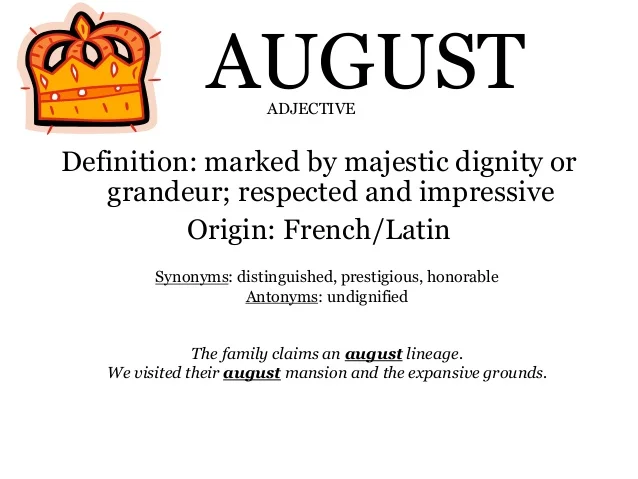
The former refers to the eighth month of the year, whereas the latter makes reference to someone or something possessing great dignity or grandeur: 'This august mansion was built in August.' 

5) Earth vs earth

From: https://freesvg.org/planet-earth

From: https://commons.wikimedia.org/wiki/File:Cracks_in_the_Earth_%28Unsplash%29.jpg


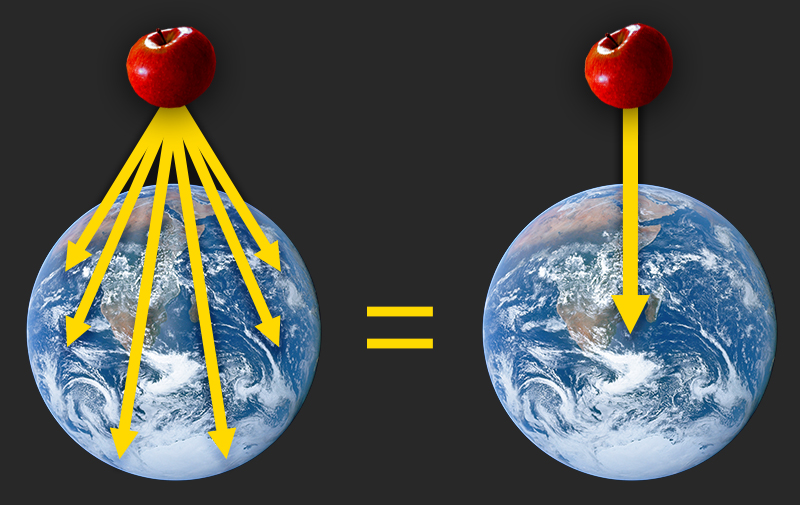
While the first word refers to our planet, the second word refers to the ground. 'The Earth's earth is just 29%.' 

6) May vs may
From: https://publicdomainvectors.org/es/vectoriales-gratuitas/Nota-mensual---mayo/70895.html


From: https://mingle-ish.com/grammar/verbs/modal-verbs/modals-may-might/


The word with capital 'm' is the fifth month of the year. The word with lower-case 'm' makes reference to the modal verb which expresses probability: 'It may rain in May.'

7) New Year vs new year

From: https://www.publicdomainpictures.net/en/view-image.php?image=311899&picture=happy-new-year-glasses

                                                                                                                                                                From: https://www.pinterest.com/maryanne_mein/new-year/


You see how capitalising changes things? 'New Year' refers to January, 1st, whereas 'new year' refers to any year that has just begun (any new year, so to speak). 'On New Year's day, I can only think of the resolutions for the new year.'

8) Mass vs mass

From: https://commons.wikimedia.org/wiki/File:Bishop_dan_IC_mass_host.jpg


From: https://commons.wikimedia.org/wiki/File:Universal_gravitational_mass.jpg


The capitalised 'Mass' refers to the religious liturgy of Eucharist. It is frequently capitalised but it is not compulsory. The lower-case 'mass' may refer to a great quantity or amount of something, or simply the main part or bulk. 'During Sunday Mass, they talked about mass hysteria'.

Well, with this entry I have concluded the capitonyms issue. I hope I haven't bored you to death he he. 

See you around


Saturday, February 5, 2022

Capitonyms II: learn the meaning of your name or surname

Hiya!

I've been quite busy lately, but I have a tiny little excuse, my second son Markus was born two weeks ago! I'm super happy! Now that I have found some me time, I can continue writing this entry, which I started before the birth of my child. 

In my previous entry, I wrote about capitonyms, that is, words whose meaning changes if the first letter is capitalized. Today's post will continue to delve into this English quirk, and, what is more, this post will be even funnier as it will explore capitonyms that are proper nouns or surnames, in other words, you'll get to learn the real meaning behind some English names and surnames...Keep in mind that there are tons of examples, but I just chose the ones that I find more reporesentative. Let's start:

  • Colours: Colours in capital letters refer to surnames: White, Blue, Black and Green are well-known surnames. 
  • Daisy vs daisy:
The lower-case 'daisy' depicts a flower. The capital Daisy is a proper noun, Donald's partner. 'Daisy doesn't really like daisies'.


  • Herb vs herb
Herb might be a man's proper noun in English yet not so common in Spanish (Gervasio). The meaning is linked to medicinal plants. We can produce a sentence saying: "Herb likes herbs."
From: https://www.canstockphoto.com/big-set-of-realistic-culinary-herbs-49398659.html

  • Bill bs bill
Do you remember Bill Clinton, one of the most controversial US presidents? His name in lower case letters: 'bill' may refer to the total amount of money you pay in a restaurant, or even the proposal of a future law. Let's imagine a sentence like: "Bill asked for the bill."

  • Cat vs cat
The lower-case cat is the dog's archenemy.  The capital Cat is a hypochorism of the noun Catherine. I guess you could say: 'Cat has a very big cat'.


  • Mike vs mike
This is probable my favourite, as it refers to my name and my son's name. 'Mike' is the hypochorism for 'Michael', whereas 'mike' is another abbreviation of the word 'microphone' in informal English. Here you can see both words: 'Mike grabbed the mike and answered the question.'


  • Sue vs sue
'Sue' is Susan's hypochorism. The word 'sue' with a small 's' means turning to legal action. 'Sue decided to sue the man that attacked her.'


  • Will vs will
'Will' is the hypochorism for 'William', whereas 'will' is the well-known modal verb to express future in English, e.g. 'Will Smith will be appearing on TV next Thursday."


  • Dick vs dick; Willy vs willy; Peter vs peter
OK, it's time to get a bit sexual now... The words 'dick', 'willy' and 'peter' refer to the male body parts... Why would anyone choose these names for a child? Hehehe.

We could say that baby Willy is touching his willy all the time.

The word 'peter' is also a verb (normally followed by the adverb 'out), which means 'to diminish gradually', for example, 'my creativity petered out'.

(I'll spare the photos on this one hehehe).
  • Eve vs eve
Who doesn't know Eve? The first woman in the whole damn world? Well, apart from being a proper noun, lower-case 'eve' depicts the evening before a special day, as seen in Christmas Eve or New Year's Eve.

'Eve didn't buy the apple on Christmas eve.'


  • Jack vs jack
The name 'Jack' is famous all across the world. I'll just give the examples of the superb actor Jack Nicholson, or the wide-known Londoner serial killer Jack, the ripper.

Aside from this, the word 'jack' is jargon used in the electricity world: "a female fitting in an electric circuit used with a plug to make a connection with another circuit."

'Jack had to buy a jack to solve the electricity connection problem.'


  • Mark vs mark
One of my favourite pairs, as it is the name of my second son. Apart from my son, I imagine you happen to have heard of Facebook's creator Mark Zuckerberg. In the literature field, does Mark Twain ring a bell?

The word 'mark' has tons of other meaning. In plural, it refers to the grades you get when you study, as in the expressions: get good / bad marks. The word 'mark' has other meanings, such as 'sign': 'a mark of intelligence'.

'I really hope my son Mark gets good marks in the future.'


  • Other names: The list of examples goes on and on and on. 'Pat', 'Snoopy', 'Hulk,' and 'John', to name a few have lower-case counterparts.
I hope you find this entry interesting. You can post some other examples of funny capitonyms if you like. I'll soon write another and final entry on this issue.

Saturday, January 8, 2022

Let's learn another English quirk: capitonyms I (related to geography)

 Hiya everyone!

I know I have tucked away my blog a little bit, but I've been super busy. Worry not, for the first post in 2022 is really interesting, or, at least, I find it fascinating. It's an English quirk, but it's not English exclusive, as it happens in many other languages. I'm talking about capitonyms.

And what are capitonyms? They are words whose meaning changes if the first letter is capitalised. This post will consist of three parts: capitonyms related to geography; capitonyms related to people's names and other capitonyms.

Capitonyms related to geography: cities, countries, towns, nationalities...

  • China vs china
https://es.wikipedia.org/wiki/Rep%C3%BAblica_Popular_Chinahttps://knowyourphrase.com/bull-in-a-china-shop

In capital letters, China refers to a country. However, lower-case china refers to a material. Do you know the expression 'to be like a bull in a china shop'?

  • Turkey vs turkey
https://www.ripleys.com/weird-news/turkeys-vs-turkey/ 


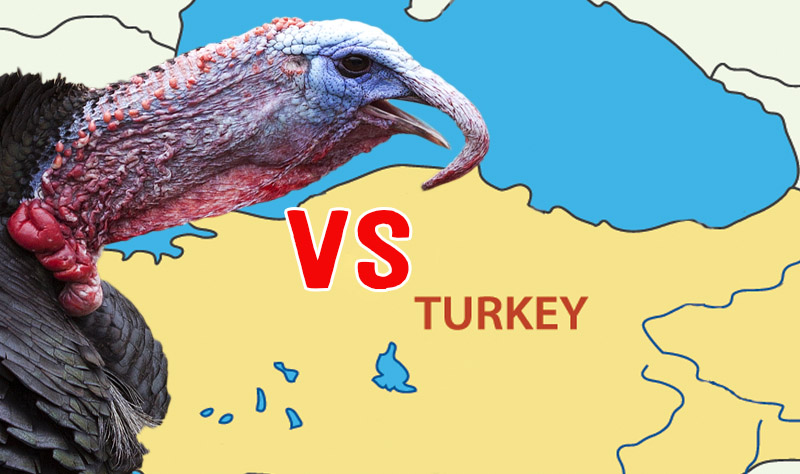
This is by far one of my favourites capitonyms ever! The word with capital letter refers to the country whose capital is Ankara, while the word with the small t depicts the widely-known animal that Americans slaughter in Nomverber...and December!

  • Chile vs chile


Let's continue with some capitonyms of food and countries. 'Chile' is a country in South-America, whereas 'chile' is a very spicy pepper.
  • Jersey vs jersey

The former may sound familiar to you as an island located between the UK and France, or a state (New Jersey) in the US. The latter, however, refers to a clothing item (often referred to as 'jumper').  
  • Sandwich vs sandwich

I suppose the first one that comes to your mind is the word in lower-case letters...Who has never eaten a sandwich, for God's sake? In fact, the world-famous sandwich is named after the count of Sandwich, a small town in England. The modern use of sandwich is an eponym coming from the count of Sandwich and is also a toponym deriving from the town with the same name. Interesting, isn't it?

  • States vs states


The word 'states' with the lower 's' refers to any country; or may be a synonym of 'fact'; or, as a verb 'to report' or 'rule'. However, the word with the big 's' refers to a specfic country, no other than the US and is normally preceeded by the article: 'last year I went to the States'


  • Polish vs polish


This is a very interesting pair of capitonyms, because they are also homographs, that is, written the same but pronounced differently according to their meaning.
The first one [‘pəʊlɪʃ] is the nationality and language of Poland, when the second one: [‘pɒlɪʃ] is to make something more smooth, that is, to burnish.

  • German vs german
The first word is obviously the nationality, but the second is not as common. It refers to family: people having the same parents or grandparents either on the maternal or paternal side. 
  • Dutch vs dutch


The first one is the nationality and language of the people coming from the Netherlands. The second one is the slang term for wife in Cockney English. The word 'dutch' also appears in the expression: 'go dutch', which means that on a date, for example, each person will cover for their own expenses. 

  • Scotch vs scotch


The big Scotch refers to 'Scot', people coming from Scotland. The small scotch refers to the adhesive tape, but as a verb, it has other meanings, to hinder or thwart. 

Well, I suppose by now you will all have understood what capitonyms are. Next post will delve into capitonyms related to people's names. I hope you like it!