Total Pageviews

Friday, February 25, 2022

It's Carnival! It's about time to dress up and...revise your English vocabulary!

 Hiya!

You're walking down the street in your neighbourhood and you see a lot of children going to or coming back from school in their costumes... You're not getting crazy, it's just Carnival! Carnival is a tradition celebrated in Spain and in many other parts in the world (such as Rio de Janeiro, Venice...).

It's not an outstanding tradition in the English-speaking world (if you travel to the UK or the US they probably won't know much about this tradition). However, Carnival is a great opportunity to improve your English vocab, so why not dedicate an entry to this wonderful tradition?

ACTIONS YOU DO AT CARNIVAL

  • DRESS UP / WEAR A COSTUME / DISGUISE YOURSELF AS A (MONKEY)
  • MAKE YOUR OWN COSTUME
  • WEAR MAKE-UP / USE MAKE-UP / MAKE UP (verb)
  • ENJOY THE CARNIVAL PARADE 
  • ENJOY THE FIREWORK DISPLAY
  • BE IN A FESTIVE MOOD
  • TAKE PART IN BULLRUNS (IN CIUDAD RODRIGO)
  • PAINT YOUR FACE 
  • DANCE TO THE FESTIVE MUSIC
  • GO PARTYING
CARNIVAL ACCESSORIES, OUTFITS AND OBJECTS

                 FANGS                                         MASKS
 
                  CONFETTI                                 FEATHERS
             WIG                                            TINSEL
            VEST AND HAT                               CAPE


BOW, SWORD, ARROWS                     BALLOONS
    FAKE GLASSES, NOSE                   GUN
        AND MOUSTACHE

CARNIVAL COSTUMES
These are examples of some Carnival costumes:
  • Sponge Bob Square Pants
  • Pirate
  • Cowboy / cowgirl
  • Clown
  • Vampire
  • Soldier
  • Doctor
  • Superhero
  • Archer
  • Magician
  • Police officer
  • Fairy
  • Vampire
  • Witch
  • Werewolf
  • Indian
  • Ghost
  • Princess
  • Skeleton
  • Knight
  • Viking
Here you have some ideas for some Carnival costumes, if you are into handcrafts, he he. 

Here you have the link and presentation to an old entry on fairy tale characters


And to conclude, here you have an English video which reuses some of the Carnival vocabulary we've seen in this entry:


I'll soon be sharing with you some exercises related to Carnival. In the meantime, enjoy Carnival if you can and dress up!

Saturday, February 5, 2022

Capitonyms II: learn the meaning of your name or surname

Hiya!

I've been quite busy lately, but I have a tiny little excuse, my second son Markus was born two weeks ago! I'm super happy! Now that I have found some me time, I can continue writing this entry, which I started before the birth of my child. 

In my previous entry, I wrote about capitonyms, that is, words whose meaning changes if the first letter is capitalized. Today's post will continue to delve into this English quirk, and, what is more, this post will be even funnier as it will explore capitonyms that are proper nouns or surnames, in other words, you'll get to learn the real meaning behind some English names and surnames...Keep in mind that there are tons of examples, but I just chose the ones that I find more reporesentative. Let's start:

  • Colours: Colours in capital letters refer to surnames: White, Blue, Black and Green are well-known surnames. 
  • Daisy vs daisy:
The lower-case 'daisy' depicts a flower. The capital Daisy is a proper noun, Donald's partner. 'Daisy doesn't really like daisies'.


  • Herb vs herb
Herb might be a man's proper noun in English yet not so common in Spanish (Gervasio). The meaning is linked to medicinal plants. We can produce a sentence saying: "Herb likes herbs."
From: https://www.canstockphoto.com/big-set-of-realistic-culinary-herbs-49398659.html

  • Bill bs bill
Do you remember Bill Clinton, one of the most controversial US presidents? His name in lower case letters: 'bill' may refer to the total amount of money you pay in a restaurant, or even the proposal of a future law. Let's imagine a sentence like: "Bill asked for the bill."

  • Cat vs cat
The lower-case cat is the dog's archenemy.  The capital Cat is a hypochorism of the noun Catherine. I guess you could say: 'Cat has a very big cat'.


  • Mike vs mike
This is probable my favourite, as it refers to my name and my son's name. 'Mike' is the hypochorism for 'Michael', whereas 'mike' is another abbreviation of the word 'microphone' in informal English. Here you can see both words: 'Mike grabbed the mike and answered the question.'


  • Sue vs sue
'Sue' is Susan's hypochorism. The word 'sue' with a small 's' means turning to legal action. 'Sue decided to sue the man that attacked her.'


  • Will vs will
'Will' is the hypochorism for 'William', whereas 'will' is the well-known modal verb to express future in English, e.g. 'Will Smith will be appearing on TV next Thursday."


  • Dick vs dick; Willy vs willy; Peter vs peter
OK, it's time to get a bit sexual now... The words 'dick', 'willy' and 'peter' refer to the male body parts... Why would anyone choose these names for a child? Hehehe.

We could say that baby Willy is touching his willy all the time.

The word 'peter' is also a verb (normally followed by the adverb 'out), which means 'to diminish gradually', for example, 'my creativity petered out'.

(I'll spare the photos on this one hehehe).
  • Eve vs eve
Who doesn't know Eve? The first woman in the whole damn world? Well, apart from being a proper noun, lower-case 'eve' depicts the evening before a special day, as seen in Christmas Eve or New Year's Eve.

'Eve didn't buy the apple on Christmas eve.'


  • Jack vs jack
The name 'Jack' is famous all across the world. I'll just give the examples of the superb actor Jack Nicholson, or the wide-known Londoner serial killer Jack, the ripper.

Aside from this, the word 'jack' is jargon used in the electricity world: "a female fitting in an electric circuit used with a plug to make a connection with another circuit."

'Jack had to buy a jack to solve the electricity connection problem.'


  • Mark vs mark
One of my favourite pairs, as it is the name of my second son. Apart from my son, I imagine you happen to have heard of Facebook's creator Mark Zuckerberg. In the literature field, does Mark Twain ring a bell?

The word 'mark' has tons of other meaning. In plural, it refers to the grades you get when you study, as in the expressions: get good / bad marks. The word 'mark' has other meanings, such as 'sign': 'a mark of intelligence'.

'I really hope my son Mark gets good marks in the future.'


  • Other names: The list of examples goes on and on and on. 'Pat', 'Snoopy', 'Hulk,' and 'John', to name a few have lower-case counterparts.
I hope you find this entry interesting. You can post some other examples of funny capitonyms if you like. I'll soon write another and final entry on this issue.

Saturday, January 8, 2022

Let's learn another English quirk: capitonyms I (related to geography)

 Hiya everyone!

I know I have tucked away my blog a little bit, but I've been super busy. Worry not, for the first post in 2022 is really interesting, or, at least, I find it fascinating. It's an English quirk, but it's not English exclusive, as it happens in many other languages. I'm talking about capitonyms.

And what are capitonyms? They are words whose meaning changes if the first letter is capitalised. This post will consist of three parts: capitonyms related to geography; capitonyms related to people's names and other capitonyms.

Capitonyms related to geography: cities, countries, towns, nationalities...

  • China vs china
https://es.wikipedia.org/wiki/Rep%C3%BAblica_Popular_Chinahttps://knowyourphrase.com/bull-in-a-china-shop

In capital letters, China refers to a country. However, lower-case china refers to a material. Do you know the expression 'to be like a bull in a china shop'?

  • Turkey vs turkey
https://www.ripleys.com/weird-news/turkeys-vs-turkey/ 


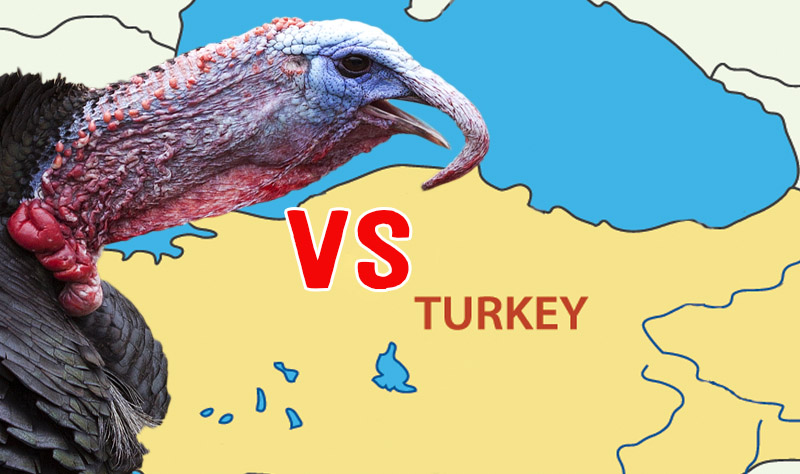
This is by far one of my favourites capitonyms ever! The word with capital letter refers to the country whose capital is Ankara, while the word with the small t depicts the widely-known animal that Americans slaughter in Nomverber...and December!

  • Chile vs chile


Let's continue with some capitonyms of food and countries. 'Chile' is a country in South-America, whereas 'chile' is a very spicy pepper.
  • Jersey vs jersey

The former may sound familiar to you as an island located between the UK and France, or a state (New Jersey) in the US. The latter, however, refers to a clothing item (often referred to as 'jumper').  
  • Sandwich vs sandwich

I suppose the first one that comes to your mind is the word in lower-case letters...Who has never eaten a sandwich, for God's sake? In fact, the world-famous sandwich is named after the count of Sandwich, a small town in England. The modern use of sandwich is an eponym coming from the count of Sandwich and is also a toponym deriving from the town with the same name. Interesting, isn't it?

  • States vs states


The word 'states' with the lower 's' refers to any country; or may be a synonym of 'fact'; or, as a verb 'to report' or 'rule'. However, the word with the big 's' refers to a specfic country, no other than the US and is normally preceeded by the article: 'last year I went to the States'


  • Polish vs polish


This is a very interesting pair of capitonyms, because they are also homographs, that is, written the same but pronounced differently according to their meaning.
The first one [‘pəʊlɪʃ] is the nationality and language of Poland, when the second one: [‘pɒlɪʃ] is to make something more smooth, that is, to burnish.

  • German vs german
The first word is obviously the nationality, but the second is not as common. It refers to family: people having the same parents or grandparents either on the maternal or paternal side. 
  • Dutch vs dutch


The first one is the nationality and language of the people coming from the Netherlands. The second one is the slang term for wife in Cockney English. The word 'dutch' also appears in the expression: 'go dutch', which means that on a date, for example, each person will cover for their own expenses. 

  • Scotch vs scotch


The big Scotch refers to 'Scot', people coming from Scotland. The small scotch refers to the adhesive tape, but as a verb, it has other meanings, to hinder or thwart. 

Well, I suppose by now you will all have understood what capitonyms are. Next post will delve into capitonyms related to people's names. I hope you like it! 

Friday, April 23, 2021

World Book Day and book vocabulary

Hiya!
Today is World Book Day and to pay homage to this day and especially to the importance of reading, I'll share with you some vocabulary related to books and some structures to write book reviews. Let's begin:


Introducing the book you're reading
- The book/novel/ masterpiece / best-seller is written by ... // Its author is well-known, no other than ...
- The book is set in 19th century England.
- The book is addressed to teenagers // The book is written for a general audience.
- It is about a man who... / It tells the story of ...
- The story is narrated in first/third person / by an omniscient narrator / through the eyes of a young boy.

Book genres
- Fantasy
- Comedy
- Adventure
- Horror
- Drama
- Fiction // Non-fiction narrative
- Biography / autobiography
- Mystery
- Historical
- Romance
- Science fiction
- Dystopian literature (a pessimistic feature)
- Suspense / thriller
- Essays
- Books for children
- Self-help books (those books that give you practical advice on a given topic)
- Part drama, part comedy, this novel deals with...

Adjectives and expressions to describe a book

Thrilling/ surprising / fascinating / exciting / amazing ...

Humorous / funny / witty / amusing / entertaining / easy to read / haunting

Thought-provoking / heart-rending 

Its plot is gripping / riveting / slow / fast-paced / slow-paced / predictable / unpredictable

The author is ironic / cynical / satirical / nostalgic / critical ... towards

It immediately catches the reader's attention / it gets the reader involved / readers won't be able to put the book down / 


Recommendations

- I can't recommend it enough
- You can't miss it!
- You won't regret it.I'm sure you'll read down to the very last page.
- I would recommend it to anyone who wants to have a good time.
- It's a must-read book / It's highly recommended.
- This book is perfect for ...
- It will leave readers with a great deal to reflect.
- This masterpiece will surely keep the readers absorbed from the beginning to the end.


Before I finish this post, I'd like you to keep two idioms related to books:

- To be a book worm (first image): Someone who enjoys reading. I love the metaphor of this idiom. A worm that digs in every book is compared with an avid reader.

- Hit the books (second image): To study hard, especially in the period of the exams. I also like this "violent" metaphor.

I hope you have learnt some interesting expressions about books today. Have you read much this year? Please, post and comment with some recommendations, as I haven't had much time to read lately...I'll appreciate your suggestions. Here you have the link to access some book reviews written by my students some years ago. I hope you appreciate it. 
See you around

Friday, December 25, 2020

HAPPY CHRIMBO! / MERRY XMAS!: Some quirks about the word 'Christmas'

From: https://keepcalms.com/p/keep-calm-and-say-happy-chrimbo/

Long time not see (once again)!

Christmas hols are finally here and I find some time to reprise my writing! First of all, Merry Christmas for everyone: I hope that all of you have got to celebrate it with your loved ones, taking all the necessary precautions. 

Today, I'll be writing a short post about the word Christmas and its variants. I just happen to love the word and it has a good story behind it!

Let's begin:

1) From a morphological point of view, the word 'Christmas' comes from the words 'Christ' and the Old English word for 'mass' (church service). It is a singular word (even though it finishes in -s). This is seen in expressions such as 'Christmas IS fun'. So, unlike in Spanish, the word 'Christmas' is English is normally preceeded by an indefinite article and it is countable: 'I wish you a merry Christmas'.  It has a plural: 'Christmases', which is not frequently used. 

Moreover, the word 'Christmas' has an adjective that can be spelt in two different ways: 'Christmasy' and 'Christmassy'. 

2) From a grammatical point of view, remember that the Christmas season is preceeded by the preposition 'at': 'I always eat a lot at Christmas'. However, each individual day within the Christmas season is preceeded by the preposition 'on': 'I love receiving my presents ON Christmas Day.

3) From a phonetical perspective, it's interesting to know that the word 'Christ' has a diphthong:  /krst/, which is lost in the word 'Christmas', whose 't' is silent: /ˈkrɪsməs/

4) Christmas has a wide-known abbreviation: 'Xmas'. This abbreviation has nothing to do with letter 'x' but with letter 'chi' (a Greek letter similar to Spanish 'j'). There are some religious people against this abbreviation as it has elided the word 'Christ' and all its meaning and this is why some people just tend to use the abbreviation to refer to the commercial side of Christmas. In a nutshell:

- Christmas: Full word that keeps the religious origin of the festivity.

- Xmas:  Abbreviated word that doesn't have much of the religious origin but it is a good alternative for the sake of the linguistic economy, used to refer to the non-secular side of Christmas: presents, consumerism, snow...

In any case, the abbreaviation is out and about and has come to stay...

From: https://www.vectorstock.com/royalty-free-vector/christmas-background-merry-xmas-sale-holiday-web-vector-27080443

5) Christmas has two British hypocorisms (nicknames that shows affection or closeness): 'Chrimbo' (or 'Crimbo')  and 'Crimble'. Apparently, 'Crimble' appeared first and it was John Lennon made the word 'Chrimbo' popular.

So, I hope you have learnt some quirks about the word Christmas. I hope you enjoy this wonderful festivity! Happy Chrimbo!

See you around

Thursday, April 9, 2020

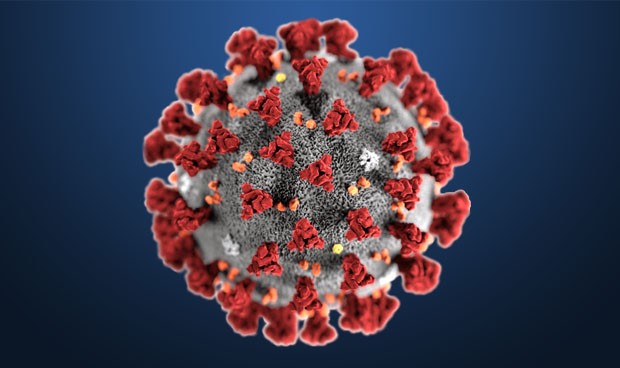
Learning English during the Covid-19 outbreak

Covid-19, gripe y otros coronavirus: ojo a las comorbilidades
Image taken from: https://www.redaccionmedica.com/secciones/neumologia/el-covid-19-frente-a-la-gripe-y-otros-coronavirus-ojo-a-las-comorbilidades-8526
Hello there!
I hope all of you  are fine and I hope this virus hasn't caused you so much trouble....I'm just coping with this situation. It's been literally ages since I wrote a blog entry. Being a parent is hard work and basically you don't have any spare time... What has it taken for me to resume my writing? Well, a world's pandemic disease. After being in confinement for a month, I have taken matters into my own hands and I have decided to resume my writing, as I had tucked my blog away...  Anyway, to deal with this unbearable situation, I have decided to resume my writing devoting this entry to Covid-19. How original! Right?
My firm resolution with this entry is that you all can express what you are going through in English, i.e. that you can learn some vocabulary, pharases and expressions related to the situation we are going through. Ready?

- Covid 19 is a pandemic disease that has affected the world on a global scale. 

- Covid 19 is not a new virus, but, rather, a new strain of the Covid family.

- The outbreak of this virus started in Spain on January, 31st. 

- At first, no one was worried because it was deemed to be just like a normal flu. However, its mortality rate so far has surpassed all the foreseeable expectations. The virus manifests through flu-like symptoms like dry cough, high temperature or fever, dyspnea and other breathing difficulties

- Although the virus mortality rate is not high, it is particularly aggresive and even deadly among the elderly and people with previous health conditions. 

- It's highly contagious! We all need to act in order to prevent it from further spreading. To prevent its spread, some containment measures are necessary: you must wash your hands regularly with soap and water; when coughing or sneezing, use disposable tissues and cover your mouth with your arm or elbow; stay in as much as possible and only go out when it is absolutely necessary, and avoid unnecessary travels. 

- On March, 9th, all on-site classes were suspended and by March, 11th, telework was highly recommended and prioritized. 

- Right now we are under strict confinement given that the state of emergency has been declared. That means, you can't be out and about unless you have a compelling reason: to commute to work, to buy supplies or groceries, to take the dog out for a (short) walk... In some other countries like Italy, some villages were under quarantine; that means no one could get in or out. However, curfew (a certain time, at which people must strictly be at home) hasn't yet been declared.

- This virus has caused countless downsides to people's lives and to the global economy, among others the loss and destruction of jobs and our health system is on the brink of collapsing, with our doctors, nurses and other staff overworking without proper personal protective equipment, risking their lives, because of the shortage of certain goods like gloves or facial masks. However, it has also triggered off people's solidarity. This virus seems to be bringing out the best in people: a lot of citizens are helping by sewing favcial masks, others are helping their elderly neighbours by going shopping for them; some people are putting culture at the citizens' disposal for free...

- On the plus side, thanks to this virus, we are realizing how lucky we were before when we could hug each other, see our relatives or even hang out with friends... In order for our lives to go back to normal, we must do our bit by following the containment measures dictated by the government or helping people in need... 

I hope you have learned a lot of vocab and expressions to explain this awful situation. Remember that confinement gives you the perfect opportunity to learn English! If you want to do so, have a look at my current teaching blog, my old teaching blog, my webpage to practise your listening and my webpage to practise your English grammar
See you soon. In the meantime, please, stay safe, ALIVE AND KICKING! 

P.S PLEASE, POST A COMMENT TO SAY HI OR IF YOU KNOW MORE EXPRESSIONS INVOLVING THIS SITUATION!

Monday, November 18, 2019

Love languages? Then this post is for you. Language-learning expressions!

Long time not write!
I know it's a cliché, but being a parent is hard work! Don't get me wrong, my son is a bunch of joy and, most importantly, he lets me sleep at night, but, in spite of that, I find it difficult to find the right time for writing. Anyway, I'm struggling to keep my blog alive and kicking and that is why today I'm writing an entry about language learning expressions that I thought you might consider useful because, if you're following my blog, you are likely to enjoy languages as much as I do!! Here we go!:

Expressions related to language learning

- To have a good ear for languages.

- I have to brush up my German. Otherwise, it’ll get rusty.

- To attain a level of competence (achieve/reach/get)

- To hold a conversation in English.

- To put everything you learn into practice.

- To get accustomed/used to speaking English in class.

- It’s very important to get your message across when speaking a language.

- I get by in German (I know some words and I can “survive”).

- I easily pick up languages, expressions or phrases. 

- I grasp new ideas, concepts, grammar (=understand).

- When you don’t know the meaning of a word, try to infer/guess it. If you are not able to, look it up in a dictionary.

- Acquiring a second language is difficult.

- English is becoming the world’s lingua franca. The dominance of English is undeniable; English is truly a global language (globish). English is gaining ground over some other languages. English is taking over (=taking control).

- A lot of languages are dying out because of English. English is threatening/endangering other languages. The survival of other languages might be compromised / might be at stake.

- Some verbs in –ing are taking hold. Modal verbs are giving way to other expressions (other expressions are taking over modal verbs)

- The English language seems to be evolving very quickly (noun: evolution; verb: evolve).

- You have to keep at your English studies.

- It’s difficult to come/get to grips with English pronunciation (=face/make an effort).

- To be immersed in an English-speaking country.

- To struggle with phrasal verbs (to have problems with).

- To be a proficient user of a language (=native-like user).

- To speak a second language (a language different from your mother tongue)

- A polyglot is a person that speaks a lot of languages, a person that picks up language very easily.

- You should take part in a language exchange.

- Some language changes go unnoticed or are barely perceptible. These are subtle changes.  However, other ongoing changes (=happening now) are considered as lasting changes.

- The more English you speak, the better.  The more languages you speak, the better person you’ll become!

Well, I hope you have found my entry useful. Why don't you start to use some of these expressions when using English? If you're interested in this topic revisit my entry on the importance of learning English and the importance of learning foreign languages.
See you around