Total Pageviews

Thursday, April 18, 2019

Parenthood: some English words and expressions that you will use if you've become a parent

Dear all,
by now most of you must know the breaking news: I have recently become a parent. In fact, I made my debut as a father on Father's Day (last 19th March). Can you believe it? What are the odds? My wife delivered my best gift ever!Well, today I'm going to share with you some words or expressions related to parenthood that you may use at some point, especially in the event of becoming a parent. 

1) Like father, like son: This expression is used to indicate that a given son behaves just like his father does, for example, both of them sleep long hours. There's another variant: like mother, like daughter. In Spanish, this idiom is represented with a stick and a splinter of wood. 
Image result for like father, like son
From: https://www.123rf.com/photo_36629360_stock-vector-like-father-like-son.html

2) The apple never falls far from the tree: Similar expression to the previous one. It indicates that  certain traits and characteristics are passed on to the offspring, that is, that your child will inherit some traits from you. For example, both of them are reckless. You know, the apple never falls far from the tree. 
Image result for the apple never falls far from the tree
From: https://www.amazon.co.uk/Proverb-Saying-Quote-APPLE-Magnet/dp/B003W2DPP0
3) To be the apple of my eye / to be the blue-eyed boy: If someone is the apple of your eye, it means that it's your favourite person in the whole world. By and large, baby girls are the apple of the father's eye. In fact, this is exactly what the idiom says in Spanish.
Image result for the apple of my eye
From: https://www.pinterest.com/pin/520939881891304508/

4) To be born with a silver spoon in one's mouth: This is said of a baby born in a wealthy family or in a well-off background. In Spanish we are a bit more modest and we refer to this expression as "be born with a bread under one's arm". That indicates the rate of poverty Spain is going through he he he. 
Image result for to be born with a silver spoon in one's mouth
From: https://www.pinterest.com/pin/413346072035905606/


5) Smooth as a baby's bottom: This simile doesn't need an explanation, does it? We all know how cute and soft babies' bottoms are, he he he. 
Image result for smooth as a baby's bottom
From: https://www.joelsartore.com/peo024-00019/

6. Like two peas in a pod: When two people are like two peas in a pod, they are very similar. Normally parents and children are like two peas in a pod. In Spanish, we refer to this as being like two droplets of water. This means that two people resemble each other, or simple that the child takes after their parents. 
Image result for like two peas in a pod
From: https://notonlygrammar.com/2016/05/17/two-peas-in-a-pod/
7. It takes a village to raise a child: A self-explanatory sentence to indicate that raising a child is hard work and requires the involvement of a great deal of people and caretakers. 

Image result for it takes a village to raise a child
From: https://www.amazon.com/Takes-Whole-Village-African-Proverb/dp/B0794P8NKV

8. Mamma's boy: If someone is mamma's boy, that means he is a bit clingy and overly attached to his mother and, therefore, less independent than other children at his age. 
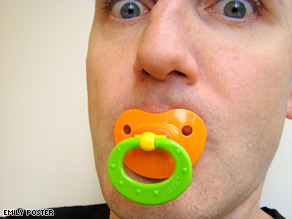
9. Helicopter parenting: Helicopter parenting is a modern trend nowadays. If your parents are controlling and they are always watching you, that means they are helicopter parents. 

10. The shoemaker's son always goes barefoot: This idiom refers to the fact that when a family of a skilled person never benefits from the family's work. In Spanish, this saying is expressed by saying:" in the locksmith's house, iron knife". 

Image result for the shoemaker's son always goes barefoot
From: https://www.pinterest.com/pin/555561304016166504/

Which of these expressions have you used? Which one is your favourite? Post it in a comment!.
P.S. If you are interested in this issue, revisit my entry on baby's vocab.

Sunday, March 17, 2019

Impatiently awaiting...

Hiya!
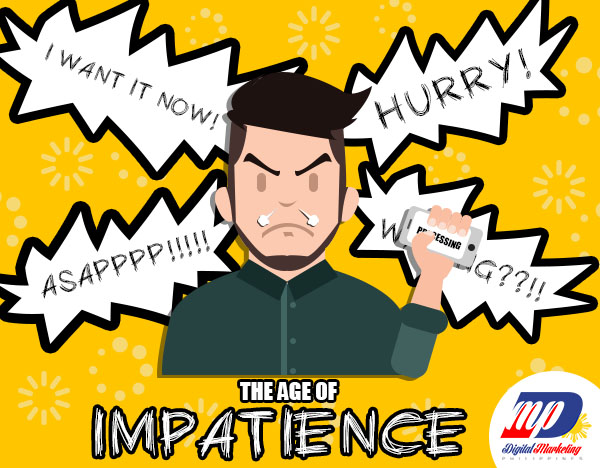
I've been very busy lately and I haven't been able to write for a whole month or so. However, I'll keep being busy for a while, but due to a very good reason, no other than having a baby in... no time. In fact, the estimated delivery time for my baby was yesterday. My wife and I are eager to meet our child and that prompted me to write an entry dealing with some expressions related to impatience, you know, to kill the time while waiting for my child. I assume most of you are eagerly awaiting for something to happen at some time in  your lives, so, if that's your case, this entry is definitely for you! Shall we start?
Image result for impatience
From: https://digitalmarketingphilippines.com/the-age-of-impatience-interesting-things-you-must-know/

1. I can't wait to...

This very useful expression is very common in spoken English. It is said when you are eagerly waiting for something, for example, 'I can't wait to meet my son.'
You can also use this expression using a new subject in the second part introduced with the preposition 'for', as in 'I can't wait for my son to be born.'

2. I'm eager to...
The adjective 'eager' is quite common to express that you are anxious (in a good sense) for something to happen, e.g. you can say that you are eager to enjoy your holidays. 

3. I'm looking forward to...
This phrasal-prepositional verb indicates that you want something to happen. It can be followed by a noun phrase, as in 'I'm looking forward to the concert' or by -ing if it is a verb, for instance, 'I'm looking forward to hearing from you soon.' In fact is one of the few structures in English combining the preposition 'to' and the -ing form. 

4. I long for...
You normally know the word 'long' as an adjective, being the opposite of 'short'. However, 'long' can also be used as a verb, followed by the preposition 'for'. In this case, it means to desperately want something, for example, 'I long for some time for myself.'

5. I yearn for.../ yearn to...
You use this expression in FORMAL English to let others know that you are eager for something to happen. 'I yearn for home-made food.' or 'I yearn to savour my mother's home-made food.'

6. I'm keen to...
The adjective 'keen' has become commonplace in today's conversations. You can say that you're keen to visit your relatives overseas, for example. 

7. I'm enthusiastic about...
If you are enthusiastic about doing something, that means you can't wait for that something to happen. In my case, as I have previously repeated, I'm enthusiastic about meeting my son!

8. I feel like + -ing...
This is a common expression in informal English. However, it is not as emphatic as the previous ones. You can say that you feel like eating ice-cream, but that is not a big deal for you. 

9. I wish...
The verb 'wish' is used in multiple different ways in English:
- You can wish for something, for example, I always wish for snow at Christmas.
- You can wish for something to happen. In my case, I wish for my wife to give birth.
- I wish + simple past: when you wish for something that could happen but you are not really optimistic about it, for example, I wish I were taller. 
- I wish + would: when you one someone to stop doing something or start doing something, when you want someone to change their habits, as in 'I wish you would behave well with your mother.'
- I wish + past perfect: when you regret something you did in the past but it has no solution now. My grandpa wishes he had studied more, for example. 

10. I crave for...
This verb is normally followed by food or drinks and it is a typical structure said among pregnant women. Pregnant women have cravings, that is, they crave for chocolate, for example. 

11. I would die for...
This hyperbolic expression indicates that you are so eager for something that you could even die for it...For instance, if you are starving, you would definitely die for a bite to eat. 

12. I'm on edge...
You are on edge when you are so worried and anxious about something. I'm normally on edge when I want to know my exam results.

Well, right now I could use all these expressions. My restlessness will hopefully come to an end when I hold my child in my arms...
If you are interested in knowing more words and expressions about this topic, why don't you revisit my entry on expressions related to nostalgia?
P.S. I'll probably be absent for a while... but I'll come back, I promise! 

Sunday, February 10, 2019

A fresh new start

Well, folks, I've been busy over the last month and I haven't been able to write anything! Too bad! Well, last year's last entry was about expressions related to the end, so now I think it is feasible to write one with expressions related to the beginning of something. I think it is a great idea, given that the year 2019 is at its  beginning and there are countless opportunities to start something new. Let's see some expressions related to new beginnings:

1. Beginner's luck
Image result for beginner's luck
From: https://www.youtube.com/watch?v=qE15YGNodb4 


This idiom refers to the fact that newbies frequently have a streak of luck when they try something (game, challenge....) for the first time, and for the first time only.

2. A fresh new start

Image result for a fresh new start
From: https://8tracks.com/musicthatisntbad/fresh-new-start


This expression is used when you have a new opportunity at something. 

3. A new beginning

Image result for a new beginning
From: https://www.123rf.com/photo_69321701_today-is-a-new-beginning-hand-lettering-motivational-message.html


Like in the previous example, a new beginning is yet another opportunity to do something. 

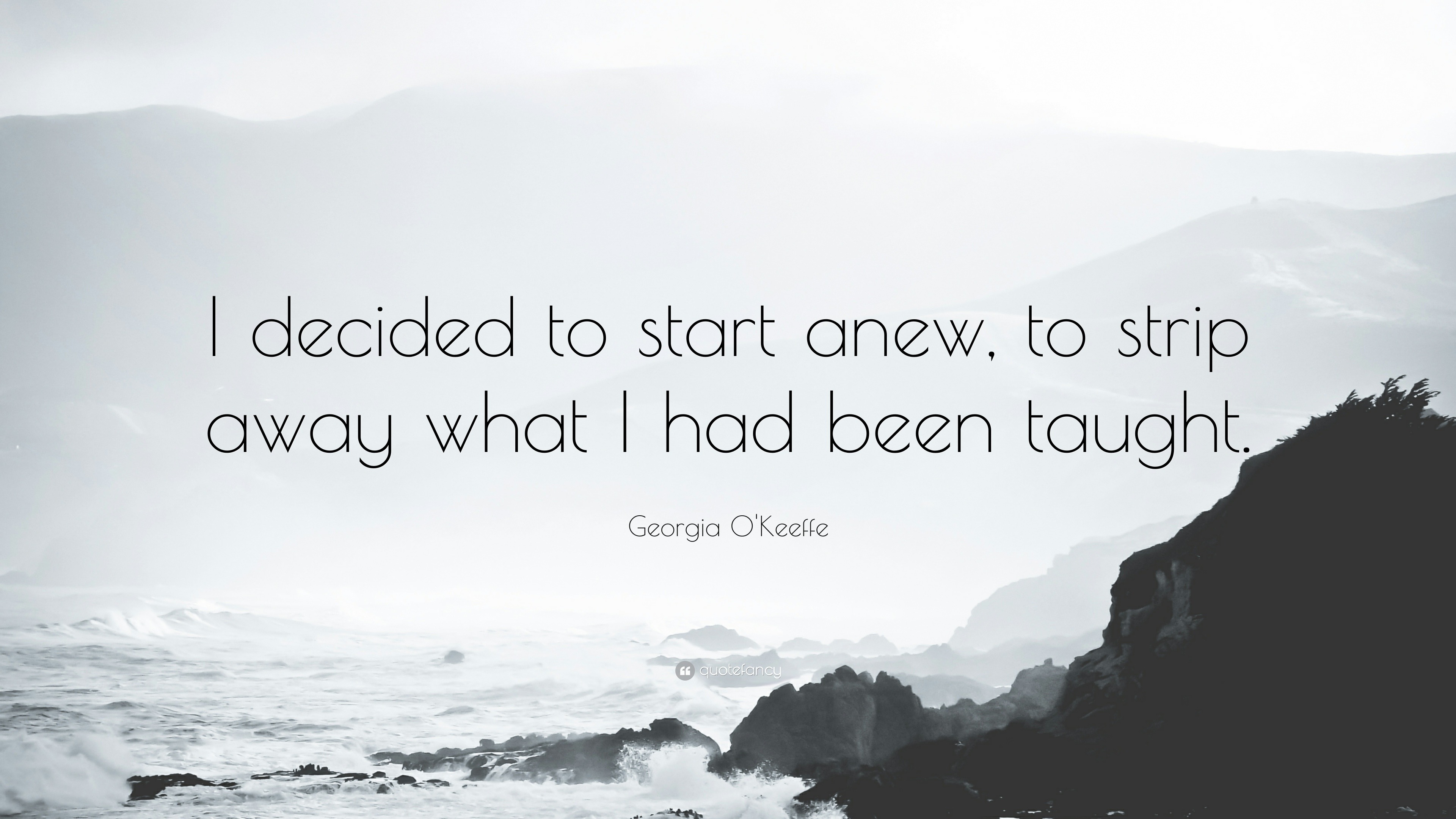
4. To start anew / to start afresh

Image result for start anew
From: https://quotefancy.com/quote/1348970/Georgia-O-Keeffe-I-decided-to-start-anew-to-strip-away-what-I-had-been-taught


This is a useful expression when you want to stop doing something and start it again in a different way.

5. Wipe the slate clean
Image result for wipe the slate clean
From: https://www.pinterest.com/pin/481533385137783104/


This idiom is used to eliminate all your previous thoughts or ideas and start anew.

6. Start over

Image result for start over meaning
From: https://thebloomingjasmine.com/tag/starting-over/


When you add the adverb 'over' to the verb start, it means that you want to make a new beginning

7. From scratch
Image result for from scratch meaning
From: https://www.pinterest.com/pin/305611524704649861/
To do something out of nothing, from the very beginning.

8. Freshers / freshman year
Image result for freshers
From: https://www.yusu.org/events/70012/vanbrugh-freshers-2018

In the UK system, a fresher is the person studying at university during the first university year. 

9. Once upon a time...
Image result for once upon a time fairy tales
From: https://www.signature-gifts.com/product/once-upon-a-time-collection-of-fairy-tales/


This entry wouldn't be complete without the widely-known phrase used to begin most fairy tales... How nostalgic!

10. Verbs and expressions related to beginnings

There are a lot of verbs related to new beginnings:

- Begin
- Start
- Commence
- Initiate
- Originate: This verb is intransitive, that means it has no direct object, for example, 'a storm originated' (not 'they originated a storm')

Other verbs are partially related to this new beginning:
- Inaugurate (start a new business, shop...)
- Introduce a new idea in the market. 
- Launch a new product

11. Linkers and conjuncts related to beginnings

To structure your speech, you can use a great deal of expressions related to beginning:
- First,
- Firstly,
- First of all,
- In the first place
- At first,
- At the (very) beginning,
- To start with,
- To begin with,
- For starters,
- As a starting point,
- First and foremost  (to indicate that the first thing you are going to mention is the most important one, i.e. there are a lot of reasons to study English. First and foremost, English is useful in international communication...)

Well, now that you have learnt some more expressions related to new beginnings, it is your turn to start anew: take up a new hobby, try something new, embark on new projects and be optimistic!
See you around.

Friday, January 4, 2019

The origin of New Year's resolutions

Welcome to my first entry of this blog in 2019! By the way! Happy New Year! Well, did you get to eat your 12 grapes! Hope so! Have you made any New Year's resolutions? Well, last year I wrote an entry on New Year's resolutions. This year,  I propose I little reading exercise on New Year's resolutions. Beware! This text is aimed at students with B2 level or so ! Here you have the text and you can download the answers at the end. The text in highly interesting, as you can learn lots of new stuff related to the origins of New Year's resolution and why people decided to start this tradition. I hope you like it!


DOWNLOAD DOCUMENT

DOWNLOAD ANSWERS TO THE EXERCISE